
There is a line that gets passed down from generation to generation like a financial commandment:
“Renting is throwing money away.”
You’ve heard it. Probably from a parent, an uncle, a well-meaning friend who just closed on their first house and is now a real estate expert.
It sounds logical. It feels true. And it is wrong often enough that it has cost a lot of people a lot of money.
Let me explain.
What You’re Actually Paying When You “Own” a Home
When you buy a house, you don’t just pay for the house.
You pay mortgage interest — which in the early years of a 30-year loan is the vast majority of every payment. You pay property taxes. You pay homeowner’s insurance. You pay HOA fees if applicable. You pay for every repair, every broken appliance, every leaky roof, every HVAC system that dies on the hottest day of August.
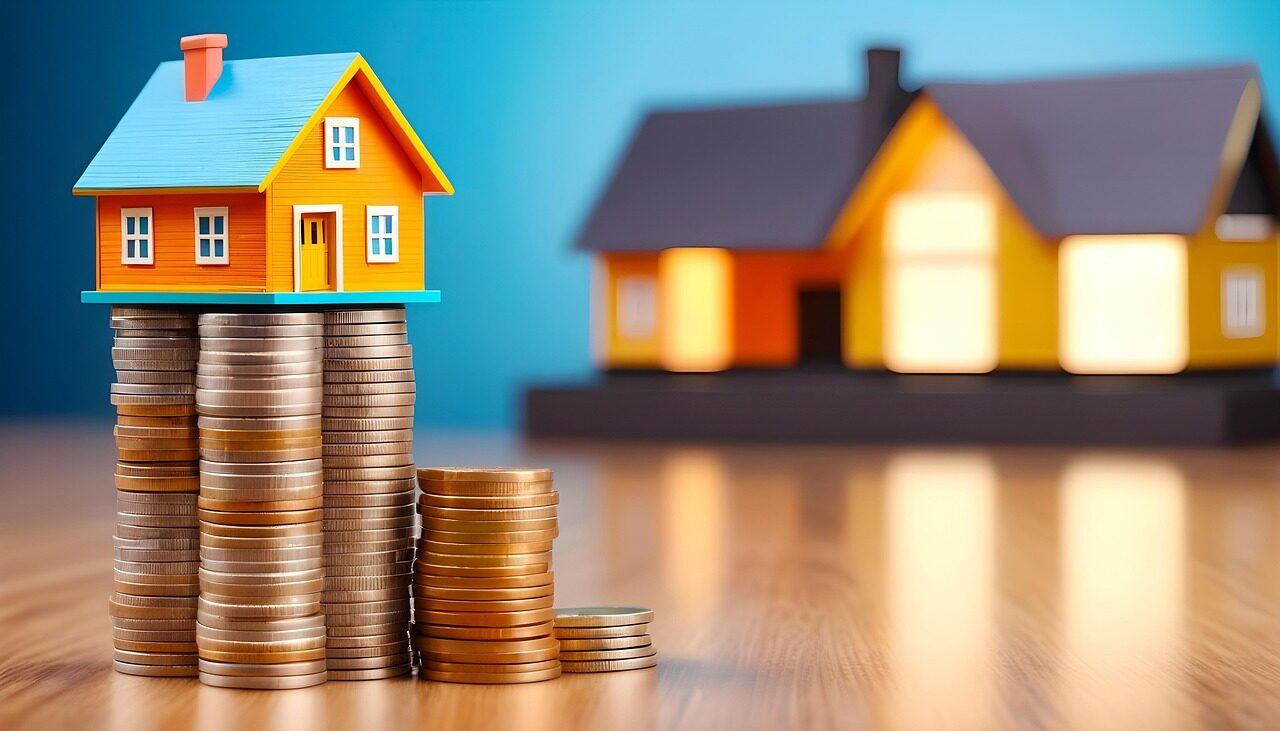
Add it all up, and the true cost of homeownership is often 1.5 to 2 times what the mortgage payment alone suggests.
Meanwhile, the renter’s landlord is handling all of that. The renter writes one check and goes back to their life.
Is the renter “throwing money away?” Or are they paying a fair price for housing — just like the homeowner is — without the hidden costs?
The Math That Doesn’t Fit on a Bumper Sticker
Let’s say you’re choosing between renting an apartment for $2,000 a month or buying a $400,000 home.
To buy, you need a 20% down payment — $80,000 — to avoid private mortgage insurance. Your mortgage payment at today’s rates might run $2,200 to $2,400 a month, before taxes, insurance, and maintenance.
So the real monthly cost of owning might be $3,000 or more. And you just locked up $80,000 in a down payment.
What if that $80,000 had been invested instead? At a 7% average return over 10 years, it grows to roughly $157,000. The $1,000 a month you’re saving by renting, invested over the same period, adds another $170,000 or so.
Suddenly the renter who was “throwing money away” is sitting on over $300,000 in liquid, accessible investments — while the homeowner has equity in a house they can’t easily access without selling or borrowing.
I’m not saying don’t buy. I’m saying the math is not as simple as everyone pretends it is.
When Buying Makes Sense
Buying a home makes a lot of sense when:
You plan to stay put for at least 5 to 7 years. The transaction costs of buying and selling — agent commissions, closing costs, moving expenses — typically run 8 to 10 percent of the home’s value. You need time in the home for appreciation to overcome those costs. Buy and sell in two years and you may lose money even in a rising market.
You can afford it without stretching. The old rule was no more than 28 percent of gross income on housing costs. That rule exists for a reason. If you’re buying a house that requires 40 or 45 percent of your income just to keep the lights on, you haven’t bought an asset — you’ve bought a trap.
The local market favors buying over renting. In some markets, buying is clearly cheaper than renting equivalent space. In others — particularly high cost-of-living cities — renting is the financially smarter move for years, sometimes decades.
You want stability and are ready for the responsibility. Owning a home isn’t just a financial decision. It’s a lifestyle decision. Roots, community, the ability to paint the walls whatever color you want. Those things have real value. Just make sure you’re buying for the right reasons — not because someone told you renting was shameful.
When Renting Makes Sense
Renting makes sense when you’re early in your career and your best financial move is flexibility — the ability to follow the opportunity, take the job in another city, or pivot without a house anchoring you in place.
It makes sense when you don’t have a sufficient down payment and would be forced into a high-cost loan that eats your financial life for years.
It makes sense when the local housing market is overheated and the price-to-rent ratio is so lopsided that buying makes no financial sense — which describes a lot of American cities right now.
And it makes sense when the alternative is buying a house that stretches you so thin you have nothing left to invest, save, or build with.
A house is not a financial plan. It’s one piece of one.
The Real Question
Stop asking “should I rent or buy?”
Start asking: “Given my income, my savings, my market, my timeline, and my goals — what is the smartest use of this money right now?”
Sometimes the answer is buy. Sometimes it’s rent and invest the difference. Sometimes it’s rent and save aggressively until the timing is right.
What it is never is a one-size-fits-all answer that your uncle came up with over Thanksgiving dinner.
Run the numbers. Know your market. Make the decision that serves your actual life — not the one that sounds right at a dinner party.
The smartest financial move is always the one that fits your situation. Not the one that sounds the most responsible.