
She was 23. Living in a small apartment. Making entry-level money. And she understood something about wealth that took me decades to learn.
I have spent my entire adult life thinking about money. How to earn it. How to save it. How to invest it. How to make it work harder than I do.
I have given financial advice from stages and boardrooms and dinner tables. I have counseled young doctors just starting out and seasoned executives approaching the end of long careers. I have built companies, sold companies, and eventually reached the place I always worked toward — where my investments fund my life and my time is fully my own.
And then one afternoon my daughter said something that stopped me cold. Something I had never heard in any book, any conference, any conversation about money in thirty years of paying close attention.
She was twenty-three. First real job. Small apartment. Entry-level salary. The kind of financial position where most people are just trying to stay above water.
I asked her how she was managing.
She thought about it for a moment and said:
“Dad, I don’t spend money on things anymore. I spend it on people and places.”
She wasn’t quoting a book. She hadn’t read Morgan Housel or studied behavioral economics or sat through a financial literacy seminar. She had just figured out — at twenty-three, on her own — something that takes most people the better part of a lifetime.
I sat with that sentence for a long time afterward. Turned it over. Tested it against what I knew. And the longer I sat with it the more I realized she hadn’t just said something clever.
She had said something true.
The Things Problem
We live in an economy brilliantly engineered to convince us that things will make us happy.
And they do — briefly. The research on this is consistent and humbling. When you buy something new, your brain releases dopamine. You feel a genuine lift. A real sense of reward. The new car, the new couch, the new phone — it delivers exactly what it promises, right up until the moment it doesn’t.
The problem is adaptation. Within weeks, sometimes days, the new thing becomes the background of your life. It fades from the foreground of your attention and joins the inventory of things you own but no longer notice. The dopamine disappears. The monthly payment stays.
I am not immune to this. I bought things in my 30s and 40s that I was genuinely excited about and genuinely forgot within a year. The excitement evaporated. The depreciation didn’t.
Things have a cost beyond their price tag. They require space. They require maintenance. They require insurance. They accumulate into a kind of physical weight — a closet, then a storage unit, then a larger house to hold all of it — each purchase creating the need for the next one.
And most devastatingly of all: things compete with each other for your attention. The more you own, the less any single thing means to you. The collector who owns a hundred pieces experiences each one less fully than the person who owns one.
What things give you
Stuff
- Fades into the background within weeks
- Depreciates from the moment you buy
- Creates ongoing costs — maintenance, storage, insurance
- Competes with other things for your attention
- Cannot be shared without being diminished
- Disappears completely from memory
What experiences give you
Stories
- Become more vivid and meaningful over time
- Appreciate in emotional value as you age
- Create no ongoing costs once lived
- Deepen in richness with each retelling
- Multiply in value when shared with others
- Become part of who you are permanently
The Experiences Truth
Experiences do something that things cannot do. They compound.
Not financially — though the memories of experiences often prove more durable than the market value of things. They compound emotionally. A great trip, a meaningful dinner, a weekend with people you love — these don’t fade the way a new couch fades. They deepen.
You tell the story again at Thanksgiving and notice something new in it. A detail you hadn’t thought about in years surfaces with unexpected clarity. The experience, in the retelling, reveals new layers. It gives back more than it originally contained.
I think about the trips I have taken in my life. The ones that were difficult, the ones that surprised me, the ones that happened spontaneously and became the stories I tell most often. None of them were particularly expensive relative to what they gave back. And none of them have depreciated. If anything, they are worth more to me now than they were when they happened.
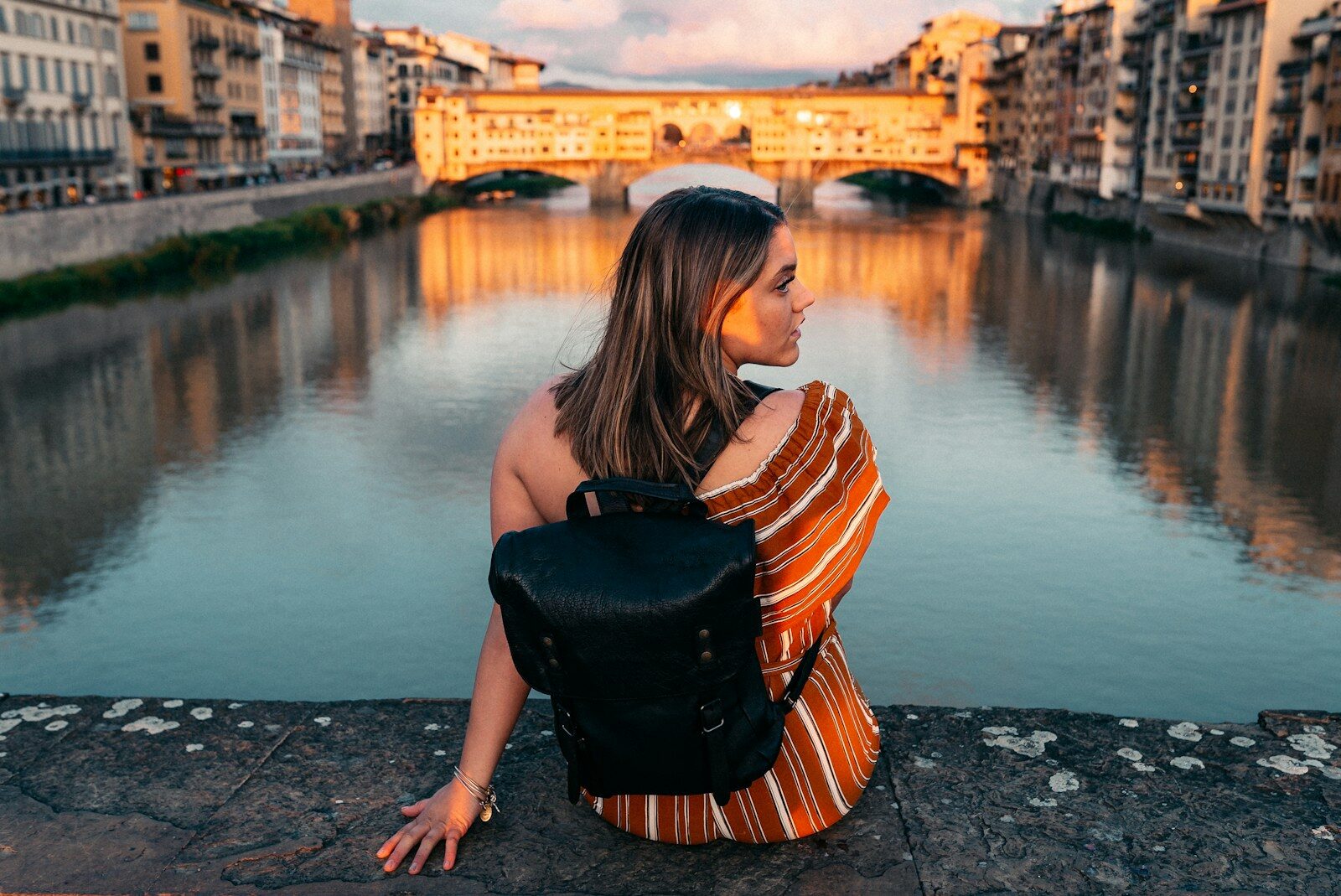
I also think — and I have written about this honestly — about the trips I didn’t take. The semester my daughter spent in Florence and the year she spent in Japan. The visits I kept telling myself I’d arrange when the time was right and the calendar was clearer and the kitchen renovation was done.
The kitchen is beautiful. I barely think about it.
Florence and Japan still ache.
2 weeks
How long the excitement from a major purchase typically lasts before adaptation sets in
Decades
How long a meaningful shared experience continues to generate emotional return
$0
The ongoing cost of a memory. Once lived, an experience costs nothing more to keep.
People and Places
My daughter’s framing — people and places — is more specific and more useful than just “experiences.”
Because not all experiences are equal. A solo shopping trip is technically an experience. A weekend alone at a resort is technically an experience. But my daughter wasn’t talking about that.
She was talking about the experiences that leave a mark because of who was in them and where they happened. The dinner where someone said something that changed how you see yourself. The trip where you were genuinely out of your depth and came back different. The afternoon that was completely unplanned and became one of your favorite memories.
People make experiences irreplaceable. The same trip alone versus with someone you love are not the same experience at the same price. One is tourism. The other is a story you will tell for the rest of your life.
Places expand you. They challenge your assumptions about how life can be organized and how other people have solved the problems of being human. Every place I have traveled that felt genuinely foreign — not resort-foreign but actually different in its rhythms and values and daily textures — gave me something I could not have gotten at home. A new frame. A wider lens. A small but permanent adjustment to how I see the world.
You cannot buy that at a department store. You cannot order it online. You can only get it by going.
“Things depreciate. Experiences compound. People make experiences irreplaceable. Places expand who you are. Spend accordingly.”
The Balance
I want to say something clearly because I don’t want to be misunderstood.
I am still a savings fanatic. I still believe in investing aggressively and building owned income and protecting the gap between what you earn and what you spend. Every word of that remains true and I will say it until my last breath.
This is not an argument against financial discipline.
It is an argument for spending the discretionary dollars you have — after investing, after saving, after building toward your future — on the right things.
Most people with disposable income spend it on stuff they don’t need and ignore the experiences they will wish they had taken. They upgrade the car when the current one works fine. They renovate the kitchen when the family would remember the vacation far longer. They buy the thing because it’s tangible and immediate and the experience feels uncertain and far away.
The experience is not far away. It is exactly as close as you choose to make it.
My daughter understood this at twenty-three on an entry-level salary. She had limited money and she made a deliberate choice about what that money was for. Not things. People and places.
That is not a compromise born of scarcity. That is wisdom born of clarity.
The Lesson
I spent years teaching my daughters about money. About compounding and index funds and the difference between rented income and owned income. About the habits that build wealth and the habits that quietly destroy it.
And one afternoon, without trying, one of them taught me something back.
Spend less on things. Spend more on people and places. Not someday. Not when the calendar clears or the kitchen is done or the right moment finally arrives.
The right moment is the one in front of you.
The trip you skip to save $3,000 might be the memory you’d pay $30,000 to get back.
I know this firsthand. I have paid that price. I am still paying it.
Don’t miss Florence. Don’t miss Japan. Don’t miss whatever the version of that is in your own life — the dinner you keep meaning to arrange, the visit you keep postponing, the experience you keep telling yourself there will be a better time for.
There is no better time. There is only this one.